The problem
A good exam question takes a subject expert real time to write, check and tag. A learning platform needs thousands, across subjects, levels and chapters, in two languages, with diagrams, and every one of them has to be right.
- Writing and tagging content by hand could not keep up with the syllabus
- Generic AI output drifts off-syllabus and makes confident mistakes
- Mathematics and science content needs equations and figures, not just text
- Published content goes straight to students, so review cannot be skipped
What we built
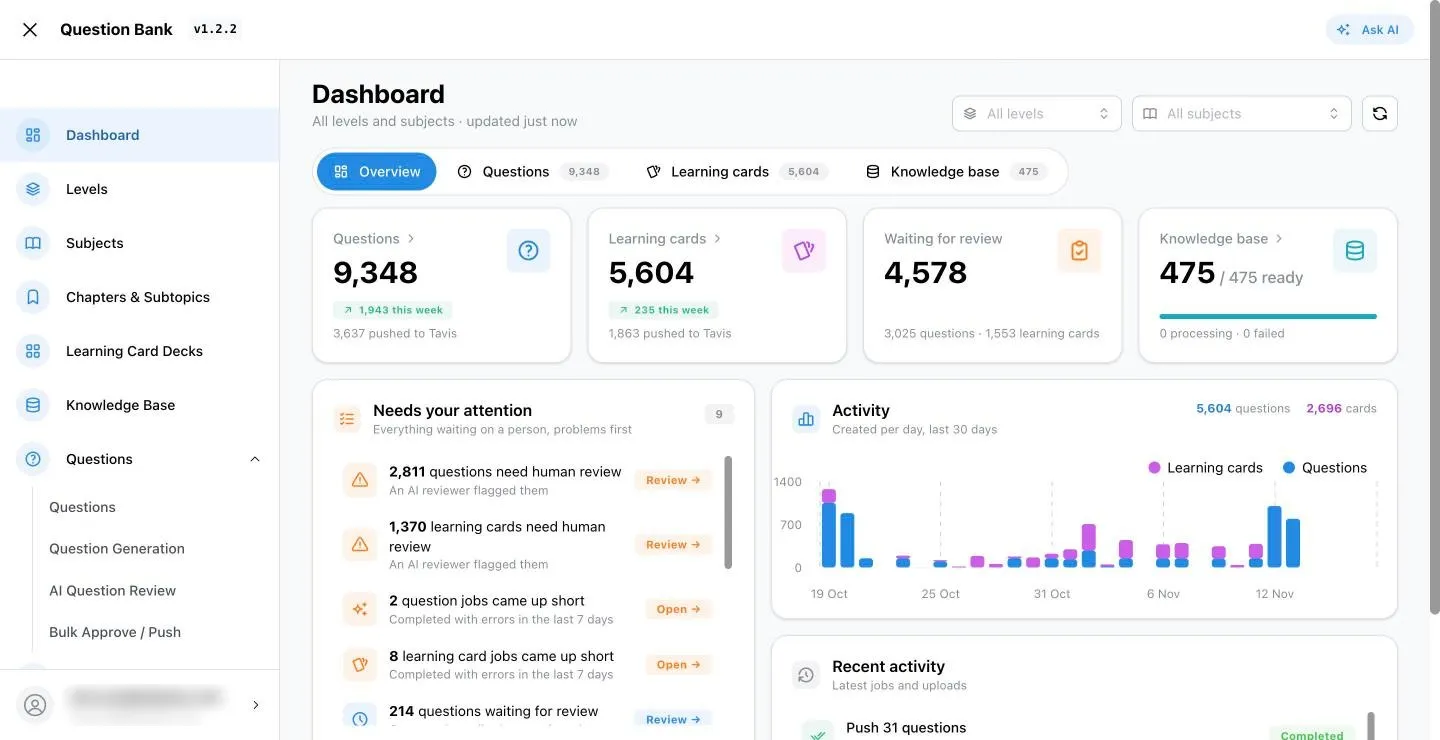
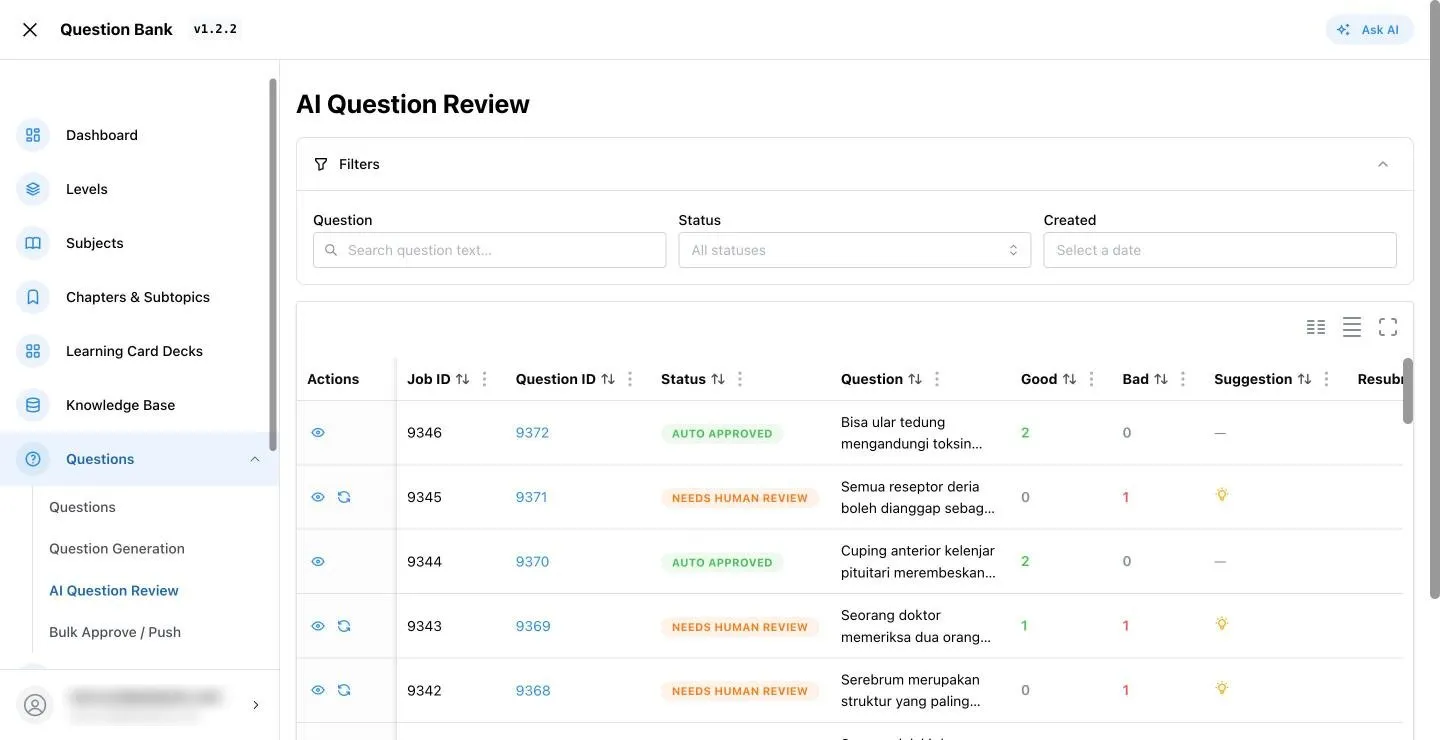
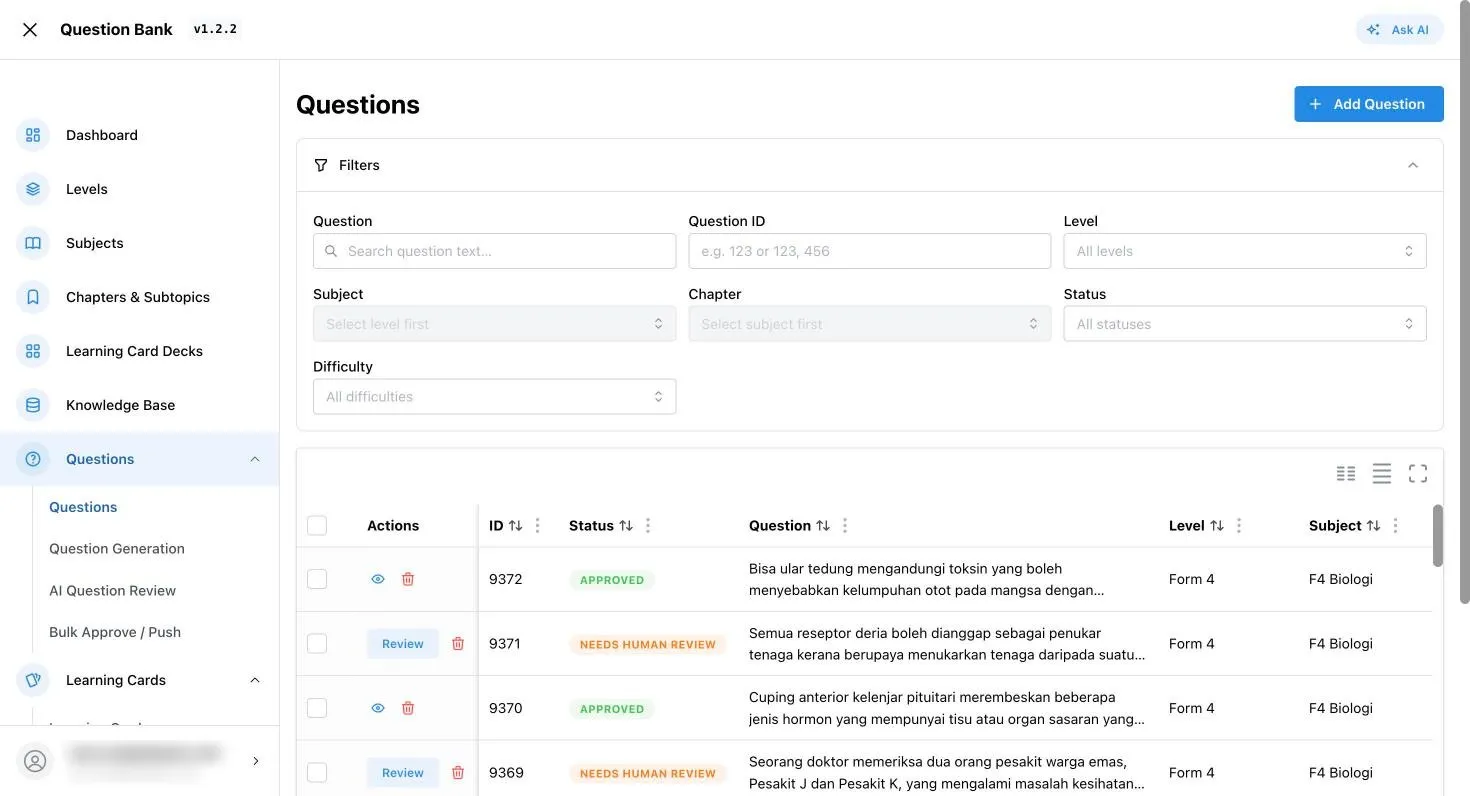
A pipeline with people in charge of it. Uploaded textbooks become a per-chapter knowledge base. Generation jobs draft questions and learning cards grounded in that material. A review job then casts a configurable number of independent AI votes on each item. A strict majority must judge it good for it to pass; anything else goes to a person. Proposed corrections reach editors as a word-level diff they can accept, edit or reject.
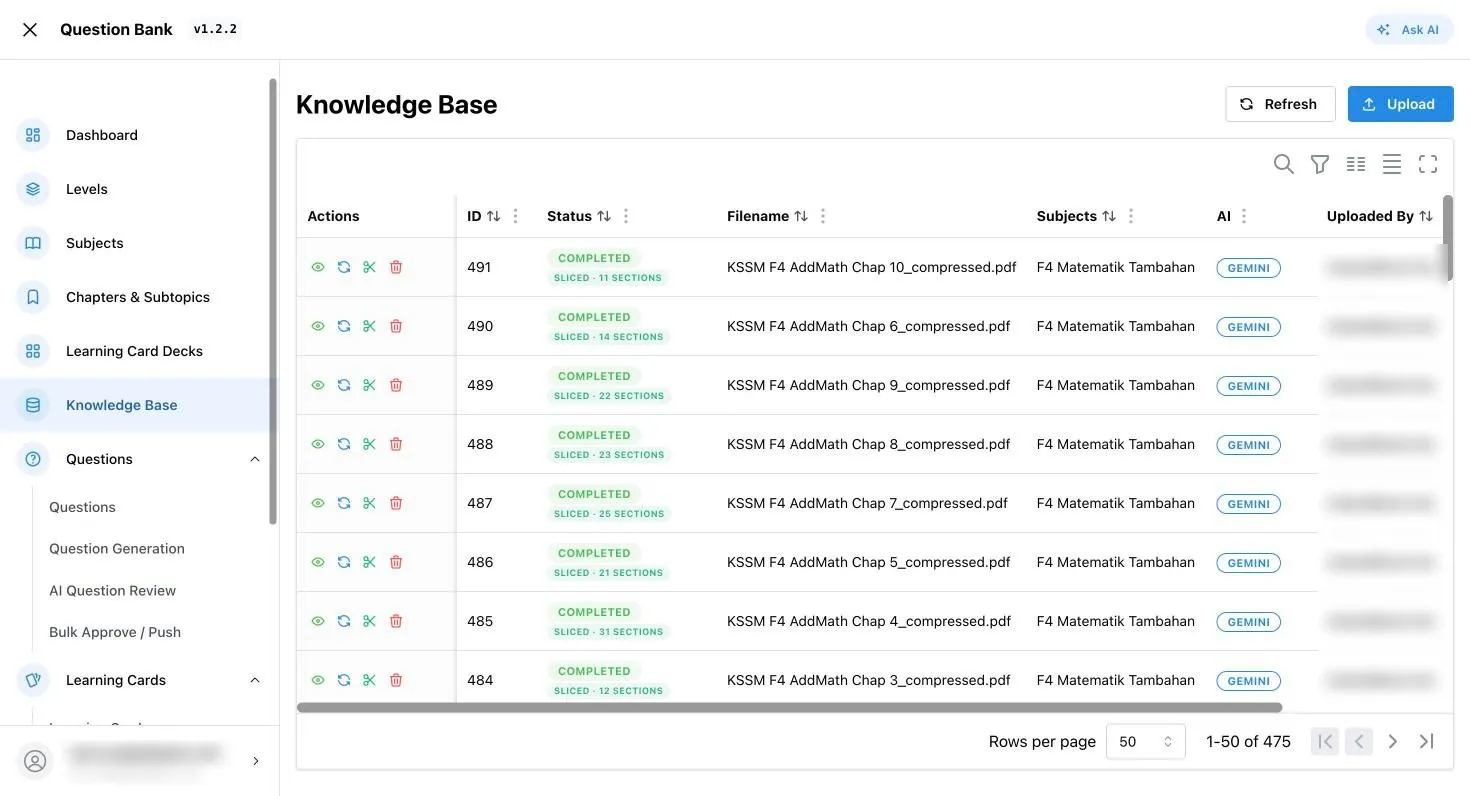
- PDF and image extraction into structured chapters, questions and figures
- Generation grounded in the uploaded syllabus material, by subject, level and subtopic
- AI review by vote: a strict majority passes an item, anything else is routed to an editor
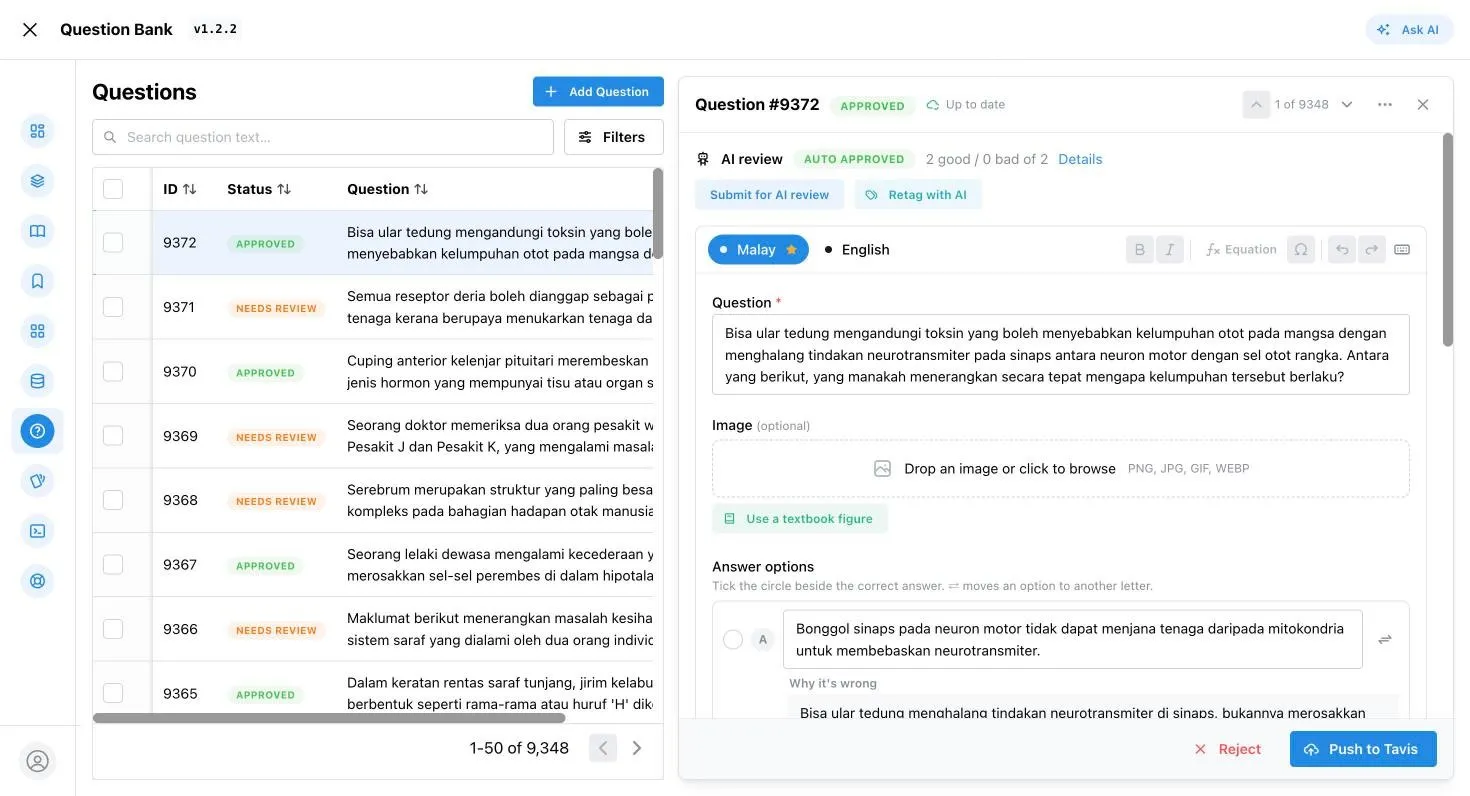
- Suggested corrections shown as diffs, never applied silently
- Equation editing, and figure redraws with an AI fidelity check against the source
- One-way publishing of approved items into the client's production database
- An in-app assistant that answers editors' how-do-I questions and links to the right screen
Why it holds up
Every prompt and model choice is stored in a prompt set that the content team can adjust per subject without a deployment. Long jobs run on a queue and stream their status to the browser. More than 1,150 automated tests cover the backend, because content that reaches students cannot depend on someone remembering to check.
Outcome
Subject experts moved from writing every item to reviewing and approving them. The platform is in production, producing bilingual questions and learning cards for the client's students.
- React 19
- TypeScript
- Mantine
- Tiptap + KaTeX
- Django 6
- Celery + SQS
- Google Gemini
- PostgreSQL
- ECS Fargate
- Terraform