The problem
Product registration, quality checks, certificates and delivery orders were handled by hand across disconnected tools. Tracing a product back to its test was slow, and a paper certificate was hard for a third party to authenticate.
- QC results lived on paper and in spreadsheets
- Test certificates were issued manually and were difficult to verify
- Management had no live view of production, pass rates or deliveries
What we built
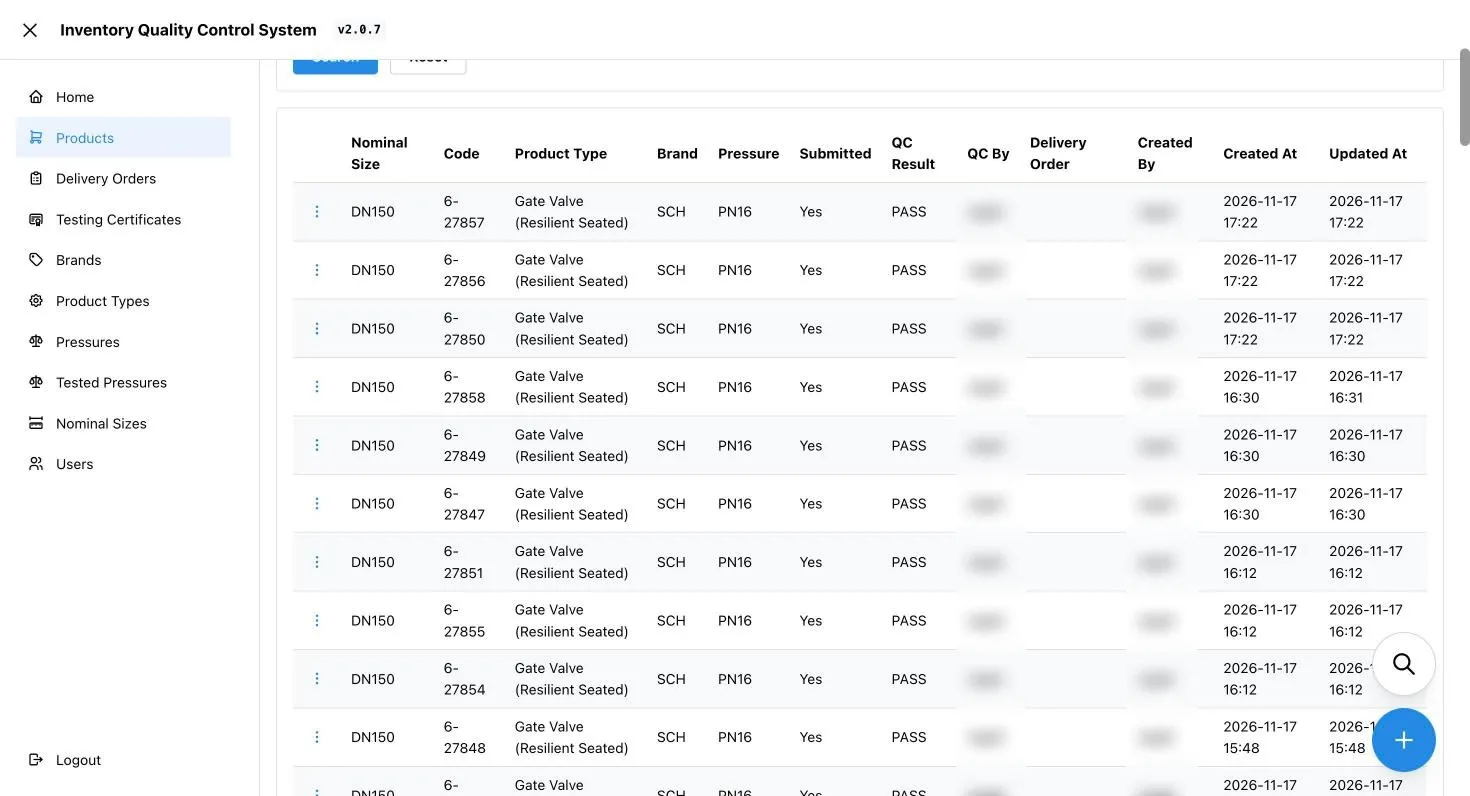
One system that links product, test, delivery order and certificate. A worker scans the product's QR code with a phone camera, records the pressure applied and the result, and attaches photos. Only a product whose latest test passed can be added to a delivery order, and that rule is enforced on the server, not just hidden in the interface.
- QR scanning on the factory floor, with manual entry as a fallback
- Retests are recorded, and the most recent result is the one that counts
- Delivery orders accept only passed and submitted products
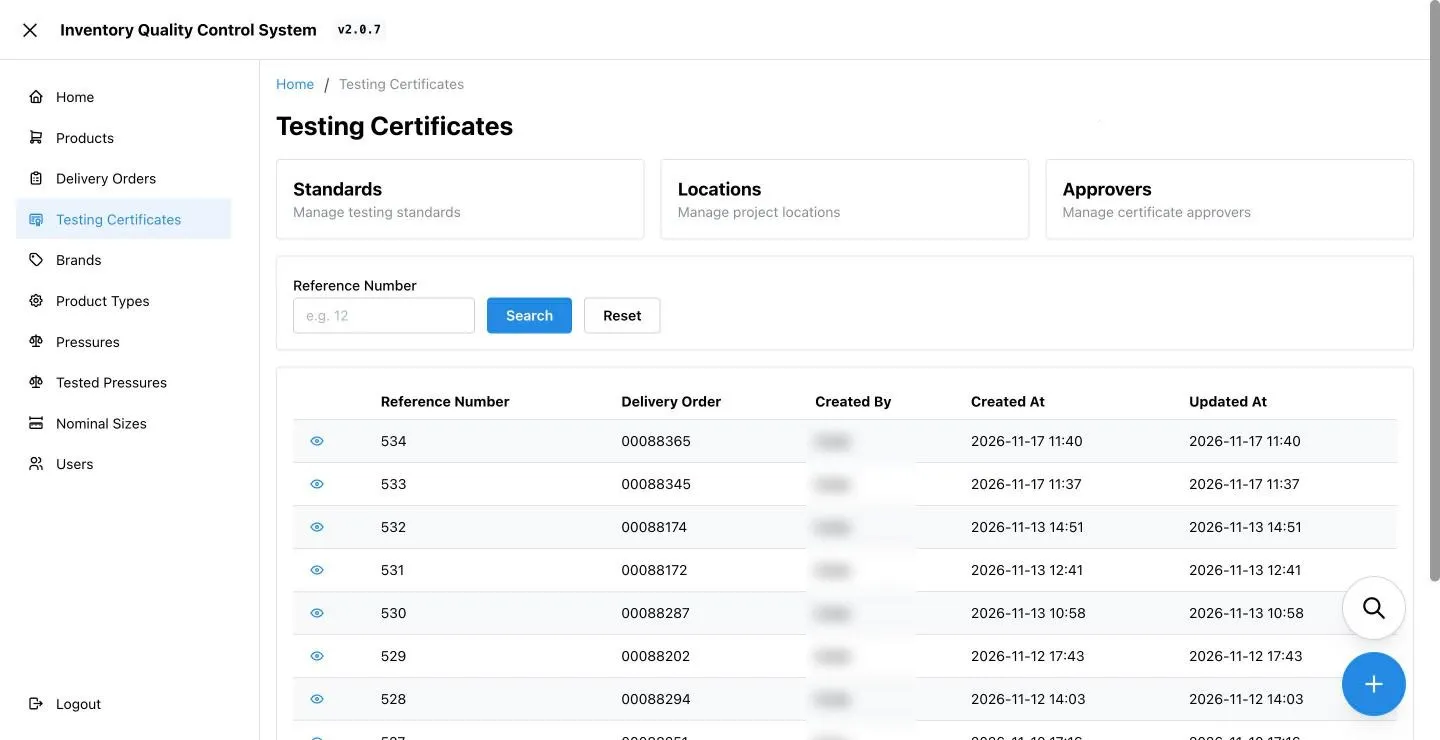
- Certificates are generated in under a second with an embedded verification QR
- A public verification page shows the certificate without exposing the internal system
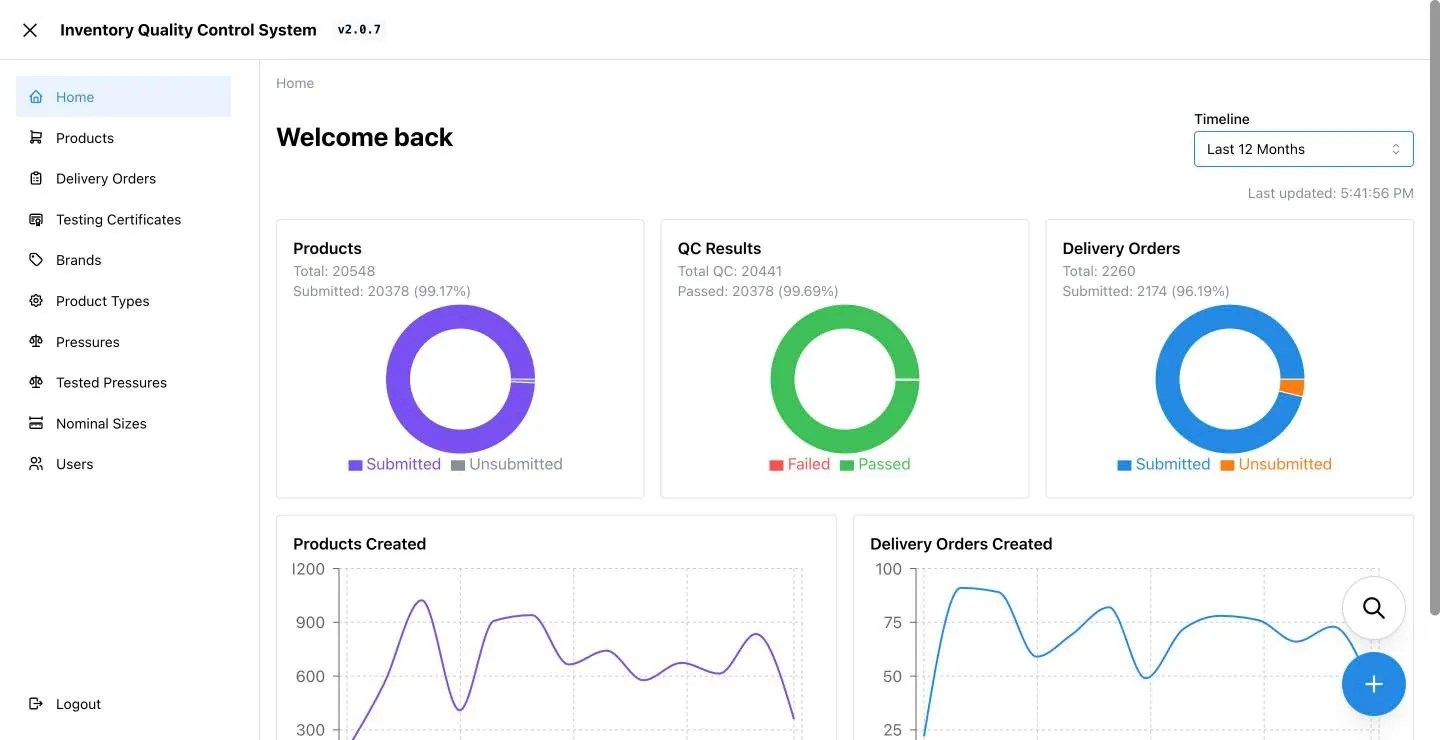
- A dashboard tracks production, pass rates and delivery volumes over time
Outcome
Certificates that took manual effort to prepare are now generated instantly, and anyone holding one can confirm it is genuine. Management sees production and quality in real time.
- Full traceability from product to purchaser
- No manual certificate issuance
- Publicly verifiable certificates that purchasers and officers trust
- React 19
- TypeScript
- TanStack Router
- Django 6
- PostgreSQL
- React PDF
- AWS App Runner
- S3 + CloudFront
- Terraform